Sunrise Alarm Clock vs SAD Lamp: Key Differences
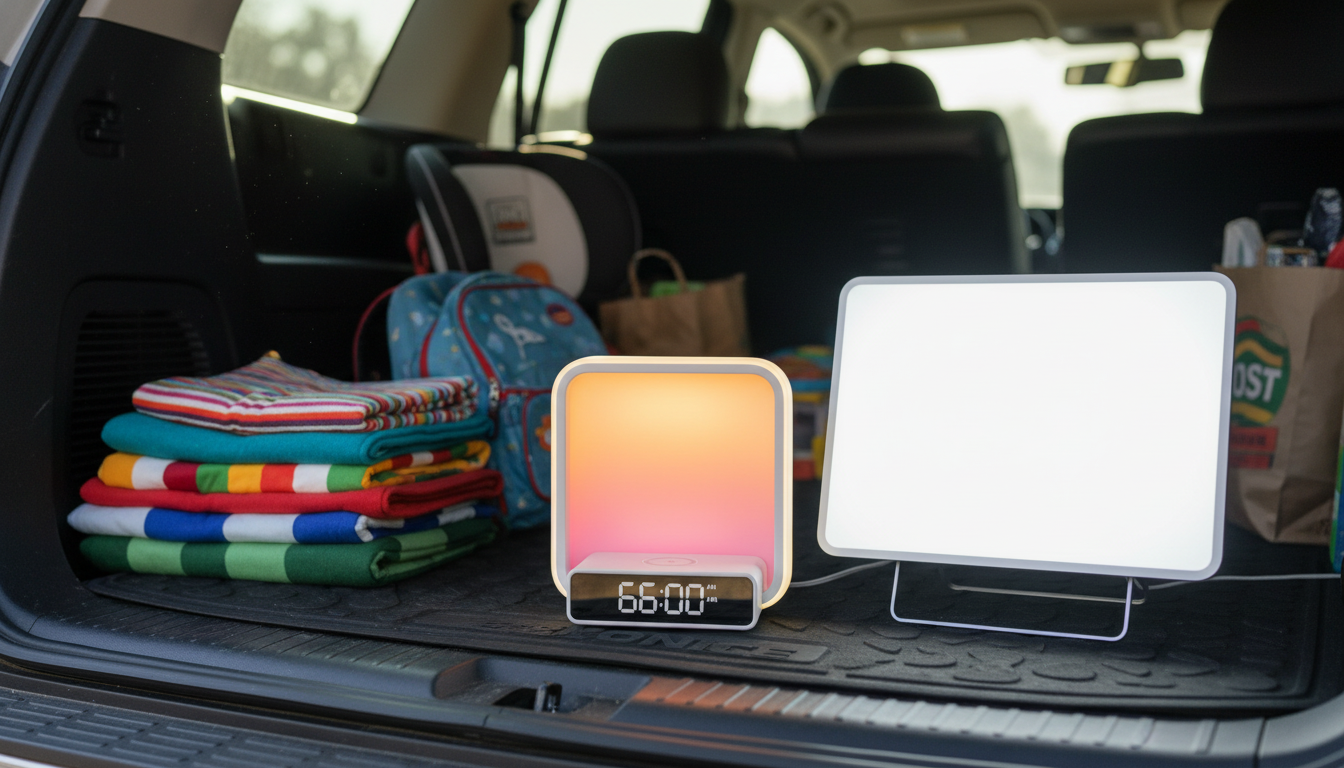
Is a sunrise alarm clock the same as a SAD lamp?
No. A sunrise alarm clock and a SAD lamp (light therapy lamp) both use bright light, but they’re designed for different jobs, deliver light differently, and are used at different times and distances.
What a sunrise alarm clock is designed to do
A sunrise alarm clock is primarily a wake-up tool. It gradually increases light in the minutes before your alarm time to mimic dawn, aiming to make waking feel less abrupt. Most models sit on a nightstand and shine toward the bed, often combined with sounds, snooze controls, and bedtime “sunset” dimming.
The focus is convenience and a gentle transition from sleep to wakefulness. The light output is typically lower than dedicated therapy devices, and it’s meant to be comfortable at close range in a dark room rather than clinically intense.
What a SAD lamp is designed to do
A SAD lamp is intended for light therapy, commonly used to support mood and energy during darker months. It’s usually rated by brightness (often cited as 10,000 lux at a specific distance) and is meant to be used while you’re awake—typically for a set session length in the morning—while you eat breakfast, work, or read.
The key difference is dosage and positioning: a SAD lamp is used at a prescribed distance for a specific duration to deliver a consistent, high-intensity light exposure. Many are designed to reduce glare while still providing strong illumination to the eyes indirectly (you don’t stare into it).
Can one replace the other?
Sometimes there’s overlap, but they aren’t automatic substitutes. A sunrise alarm clock may help with groggy mornings and a smoother wake-up routine, but it often doesn’t match the brightness specifications of a true therapy lamp. A SAD lamp can be used as part of a morning routine, but it won’t usually provide the gradual “dawn simulation” experience that makes sunrise clocks feel gentle.
For a deeper comparison and tips on choosing the right option, visit the main guide on sunrise alarm clocks vs. SAD lamps.
FAQ
Can a sunrise alarm clock help with winter blues?
It may make mornings easier by creating a gradual wake-up, which some people find improves their routine and energy. For targeted light therapy needs, a dedicated SAD lamp is more likely to meet recommended brightness levels.



Leave a comment